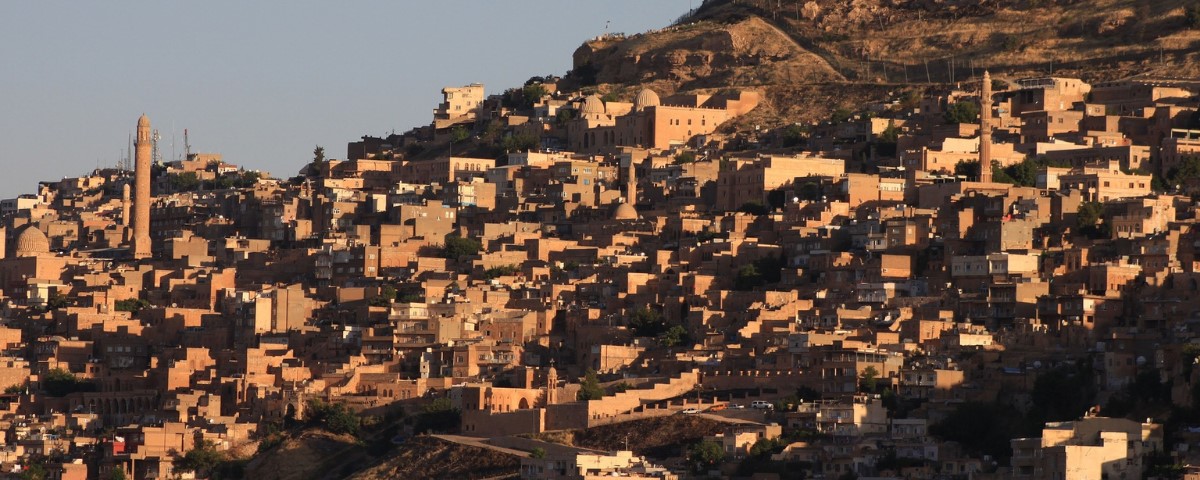
A mosaic of culture and a pearl of the Southeast, Mardin, as one of the destinations of Mesopotamia, makes travelers walking through its streets feel as if they have made a journey into history. There are buildings on the streets of Mardin, each of which belongs to different civilizations. You should know that Turks, Assyrians, Pagans, Kurds and Arabs have lived here together for centuries. You can also say Mardin a mixture of cultures, since throughout history it has hosted many civilizations. While the winter seasons in Mardin are very cold, the summers are dry and crowded. In addition, you may have some difficulties with planning, because in winter it gets dark around 5 o'clock, and places such as museums, monasteries and ruins close early. For this reason, you should visit Mardin in April, May, September and October.
Since the houses, mosques, churches, bridges and all other structures in Mardin are made of nahit stone, the city looks like a painting. Since most of the hotels are also built of this stone, some of them are called historical mansions. In addition to hotels with a historical texture, there are also ordinary hotels. If you want to stay in a hotel built of nahit stones, you should choose the Old Mardin area. This region is called the region where Mardin Mardin is made, and many houses built of nahit stones are located in this region. However, it may be difficult for you to find cheap hotels here, and you may have problems with parking, because this is a place with alleyways. If you prefer the miniature Midyat region of Mardin, you can also find stone hotels here. Prices in hotels range from medium to high, as in Old Mardin. In addition, one day of accommodation is enough for this region. Lastly, there is the New region of Mardin (Yenisehir). This area is also called the city center. In this area you see sights and ordinary houses, but there are also awesome restaurants where you can eat. However, if you come to the city for the first time, you can feel the spirit of the Old Mardin Mardin district.
Syrian and local dishes are among the most popular dishes in the cuisine of Mardin. In Mardin's kitchen, dishes are prepared with pepper, tomato paste and lots of spices. You can see that the dishes are served on silver or copper trays in the Mardin kitchen with meat-heavy menu. Thus, both a visual feast and a taste feast are presented. Syrian wine, stuffed kibbe, lebeniye soup, genadir soup, harire dessert, stuffed dried eggplant, accin, zingil dessert, kishk soup, kahiye dessert, Mardin cupcake (kiliche), chagla dinner, muhammara, sembusek, pecan pie, cheese halva, stuffed ribs, ikbebet, Mardin kebab with onions and boiled stuffed meatballs Mardin are some of the local delicacies that you can try in Mardin. In addition, the foods that can be purchased from Mardin can be listed as walnut sausage, almond candy, rusks, donuts, dried eggplant, pepper, spices, legumes or chickpeas. When you happen to pass by Mardin, don't forget to visit the well-known places such as Hanzade Breakfast & Cafe, Brothers Wood Bakery, Matador Bakery, Cercis Murat Mansion, Kebab Shop Yusuf Usta, Kasri Kaya (Cigerci Yusuf), Kebab Shop Rido, Sahin Tepesi Restaurant, Bagdadi Restaurant, Dobo Restaurant, Cagg Urfa Table and Antique Sur Cafe & Restaurant.
You need to taking the time to visit Mardin at least 3-4 days. Before returning from Mardin, Castle of Mardin, Midyat Clock Tower, The Streets of Mardin, Mardin Houses, Sakıp Sabancı Mardin City Museum, Mardin Museum, Mardin Midyat City Museum, Mardin, Midyat State Guesthouse, Hacin Sehmus Mete Mansion, Kayseriye Bazaar, Revakli Bazaar, Mardin Bakircilar Bazaar, Republic Square, Beyazsu, Valley of Gurs, Tur Abdin Plateau, Gumusova Cave, Sea Cave (Derik), Linyevri Healing Cave (Midyat), Germ-i Ab Thermal Spring (Dargecit), Emir Hamam, Savurkapi Radviyye Hamam such as the popular and emblematic places/buildings you can see.
12.11.2022