Antalya, located in southern Turkey in the Mediterranean region, is a province rich in historical, geographical, and socio-cultural aspects. Its status as a significant settlement center throughout history continues to this day. As one of the oldest settlements in Turkey, Antalya’s urban history dates back to the earliest periods when humans first appeared on Anatolian lands. Research has uncovered nearly 100 ancient city remains. These remains shed light on civilizations such as the Hittites, Lydians, Persians, Ionians, Macedonians, and Romans that established themselves in the region during antiquity. Among the findings in Antalya, the most significant discoveries were made in Karain Cave, revealing information about prehistoric human communities and identifying eight cultural layers.
The cities uncovered in the region, including Alanya, Side, Perge, and Demre, were major trade centers of Anatolia in almost every era. At times, they fell into the hands of pirates, while at other times, they maintained their existence as religious centers. Occasionally, they were destroyed by invasions or natural disasters, abandoned, and later revived. Therefore, it is possible to trace a cultural accumulation spanning millennia in the region. With today’s provincial boundaries, Antalya encompasses parts of the ancient regions of Pamphylia, Cilicia, Lycia, and Pisidia.
During the period known as “Pamphylia,” the city was founded by King Attalos II of Pergamon between 159–138 BC. The emergence of centralized powers over large territories began to shape not only the fate of Pamphylia but also of Anatolia as a whole. The region’s history has largely been defined according to Anatolian history, while occasionally retaining its unique characteristics.
City remains uncovered in Anatolia, especially inscriptions found at these sites, provide illuminating information about early history. With the Bronze Age, distinct societies with defined names, social and economic structures, and cultural and political relationships emerged. The ruins of Troy in western Anatolia (Level II) and Hittite cities in central Anatolia such as Boğazköy, Kültepe, Alaca, and Alişar introduce the Bronze Age. The Hittites, thought to have come to Anatolia via the Caucasus, Iran, and Mesopotamia, represent a civilization lasting from roughly 2500 BC to 1200 BC. Initially formed by independent cities, the civilization gradually centralized, establishing a kingdom (1750–1450 BC) and later the Hittite Empire (1450–1200 BC).
In the 13th century BC, tribes arriving from Thrace destroyed the Hittite civilization and expanded southwards to the borders of Mesopotamia and Egypt. Historical maps of Anatolia from 2000–1400 BC indicate that the Antalya region was within the boundaries of the Great Hittite Kingdom. Tablets from Boğazköy (Hattusa) suggest that Antalya was part of the Arzawa region mentioned in these records.
The large migration, believed to be part of the Dorian invasion that ended the Achaean civilization in Greece, also led to the collapse of the Hittite Kingdom. Afterwards, the Hittites lived in scattered, independent communities in Anatolia. During this period, city-states in Pamphylia, Lycia, and Cilicia maintained their independence as small powers.
Following 1000 BC, Thracian tribes called Phrygians settled in central and northwestern Anatolia, while Lydians, Carians, and local Anatolian populations lived in southern Anatolia. In the 13th century BC, the Achaeans fleeing the Dorians established new cities in western Anatolia. These diverse ethnic groups eventually formed the Phrygian (725–675 BC) and Lydian (680–546 BC) states. In southern regions such as Pamphylia, Lycia, and Caria, the indigenous people initially maintained their independent political structures.
The culture that developed in this region is difficult to attribute to a single civilization. During migrations, Greeks brought their advanced culture, yet earlier cultural elements persisted. For example, the Lycians utilized the malleability of the pine tree to construct ships using the “dry-fit” method, which is still observed today. Lycian burial techniques continued in grain storage buildings, and traces of their wooden framework methods are still visible in architecture.
The term “Pamphylia” in Greek is meaningful: it combines “pan” (many) and “phyle” (tribe), reflecting the diverse clans of the region. Herodotus suggested that the local people were descendants of Mopsus, Kalchos, and Amphilochos, who spread after the Trojan War. Charles Texier supported this view. According to legends, Agamemnon’s companions traveled across Asia Minor after the Trojan War, founding cities. Kalchos and Amphilochos settled in the south, naming the region Pamphylia (“land of all tribes”).
Etien claimed the name derived from Pamphili, daughter of Mount Rakyos. Earlier, the region was called Mopsustia after the famous seer Mopsus. According to geographer Melitos, this legend comes from Greek myths. Mopsus, like other oracles, was a son of Apollo. He founded the city of Mallos in Cilicia with Amphilochos returning from Troy. Later, the region was named Mopsustia.
Etien further identified the pre-Greek communities as Semitic groups: Cappadocians, Cilicilians, Lycaonians, and Katalonians, divided into four branches: Milis, Solymis, Termillis, and Lisis. Homer mentions Solymians living in the region in the Iliad. The exact origins of Pamphylia’s inhabitants remain uncertain.
Written records illuminate Pamphylia’s history alongside Anatolian history. Hittite tablets place Pamphylia within the borders of the Anatolian Kingdom in the second half of 2000 BC. Historians agree that “Ahhiyawa” or “Arzawa” mentioned in these records encompassed Pamphylia. References to the “Lukki” or “Lukka” people in Hittite and Egyptian sources likely refer to the Lycians. No Hittite artifacts have been found in Antalya so far, suggesting that a separate principality existed in Pamphylia under the central Hittite authority. (Recent excavations highlight the region’s original inhabitants, the Luwians—ancient peoples of Anatolia. For further reading, see The Mysterious People of Anatolia: The Luwians.)
Lycia appears to have remained largely free from foreign intervention until the late 6th century, likely due to its location away from major Anatolian centers. Herodotus claimed that the Cilicians and Lycians were the only peoples who resisted King Croesus of Lydia. However, by around 540 BC, the Lycians, like the Cilicilians, were brought under foreign control by Persian general Harpagos, who defeated a small Lycian army north of Xanthos. According to Herodotus, when the Lycians realized defeat was inevitable, they moved their families, property, and slaves to acropolis foundations, conducted at least one suicidal attack against Harpagos’ forces, and died to the last man.
In the 12th–8th centuries BC, two major waves of Greek migration brought settlers to Anatolia, establishing or developing cities. This, combined with Phrygian and Lydian cultural contributions, created magnificent ancient civilizations.
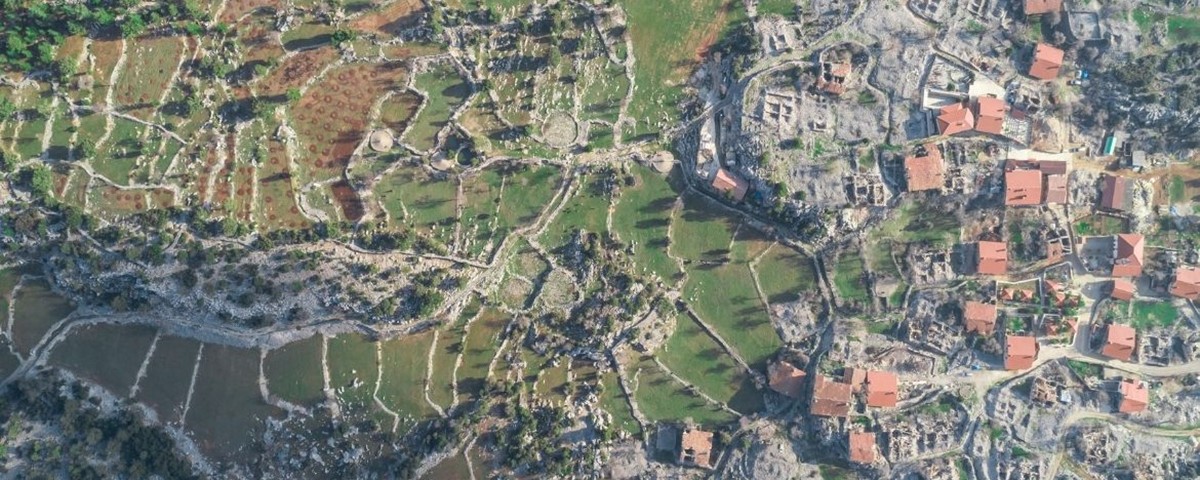
Anatolia is the cradle of ancient civilizations, and Antalya is one of the most important regions of this cradle. Nearly 100 city ruins within Antalya province testify to this. These ruins, spanning a wide historical period, make Antalya one of the richest regions globally in terms of historical artifacts. The region’s cities were always of strategic importance to central powers controlling or conquering Anatolia, gaining significance at various points in history.
Xanthos was the capital of the first known federation. Side and Perge were Christian centers in Anatolia. Alanya served as a Seljuk military base.
When historical cities within Antalya province are categorized by region, a long list emerges.
Antalya’s historical cities should be promoted to both domestic and international tourists, emphasizing historical heritage and cultural awareness. Tourist experiences should shift from sun, sea, and resort leisure to historical and cultural exploration, led by knowledgeable guides. Tours of ancient cities and museums will enhance and immortalize the holiday experience. A series of articles introducing ancient cities of Lycia will provide useful information for tourism and travel in Antalya.
Cities in the Pamphylia Region
| Ancient Name | Modern Name |
|---|---|
| Attalia | Antalya |
| Aspendos | Belkıs |
| Livri | - |
| Magydus | Lara |
| Olba-Olbia | Kurma |
| Side | Old Antalya |
| Perge | Murtuna |
| Ptolemais | - |
| Sillium | Yanköy |
Lycia Cities
| Ancient Name | Modern Name |
|---|---|
| Acalissus | Kuristan (Alakırçayı) |
| Antiphellus | Antifli |
| Amelas | Elmalı |
| Araxa | Ören |
| Myra | Demre |
| Arycanda | Aykırça |
| Aperia | - |
| Apollonya | Kekova |
| Bubun | Ebecik |
| Balbura | Kendiba |
| Calynda | Tersakan |
| Corydalla | Hacıveliler |
| Cragus | Dodurgahasarı |
| Choma | Eskihisar |
| Clareae | Yuva |
| Dias | - |
| Gaea | Aktaş |
| İsinda | Korkuteli |
| Lymira | Tekkeköy |
| Masicytes | Akçay |
| Ubessa-Oenoanda | - |
| Olympus | Deliktaş-Çıralı |
| Phellus | Sedre-Çukurbağ |
| Pinara | Minara |
| Podalis | Avlan |
| Patara | Ovagelemiş |
| Dinost | - |
| Phaselis | Tekirova |
| Rhodiapolis | Şehköy |
| Lidima | Dodurgahasarı |
| Telmessus | - |
| Telos | Dodurga |
| Tymera | - |
| Trabala | Karcıbayırı |
| Mena | - |
| Tybenissus | Bozalar |
| Pirha | Bezirganköy |
| Arsada | Kayadibi |
| Tristus | Çukurbağ |
| Gorba | Gavurhisar |
| Tosa | Sarlar |
| Gomba | Gömbe |
| Trishane | Tirmiş |
| İstlada | Kapaklı |
| Trissa | Beldibi |
| Xanthos | Kınık |
| Simena | Kale |
| Şura | - |
| Issium | Dere |
| İdebessus | Kozağacı |
| Cadiyanda | Üzümlü |
Pisidia Cities
| Ancient Name | Modern Name |
|---|---|
| Adada | Karabaylı |
| Agpiya | Atabey |
| Amblada | East of Eğridir |
| Anabura | Old Karaağaç |
| Antiochia | Yalvaç |
| Andeda | Andiya |
| Ariassus | Bademağacı |
| Apollonia | Uluborcu |
| Berbe | - |
| Baris | Isparta |
| Gonona | Göne |
| İsinda | Korkuteli |
| Kolbasa | - |
| Pogla | Fıgla |
| Comama | Şerefhöyüğü |
| Crimna | - |
| Olbasa | Belendi |
| Verbe | Ziyint |
| Selgi | Zerk |
| Termessus | Güllük |
| Cireptopolis | - |
| Minör | - |
| Timbrada | - |
| Colbassa | Yuva |
| Etenda | Gödene |
| Erimna | Ormana |
| Cretopolis | Kızılkaya |
| Crmasa | Teşkesiği |
| Lagos-Lagbe | Alafradı Plateau |
| Pappa-Tiberia | Sırt (Manavgat) |
Cilicia Cities within Antalya
| Ancient Name | Modern Name |
|---|---|
| Antiochia | Göney |
| Lotape | Ayda |
| Hemaxsia | Sinekkale |
| Korakesyon | Alanya |
| Kibyra | Karaburun |
| Siedra | Seki |
| Sebaste | Sebasti Barracks |
| Selinus | Silinti (Gazipaşa) |
| Petolemais | East of Karaburun |
The ancient cities listed here, particularly those discussed in the Lycian Civilization series under the “Lycian League,” reveal the real founders, cultural heritage, and developments built upon the legacy of these civilizations.
Enjoy reading!
02.07.2021