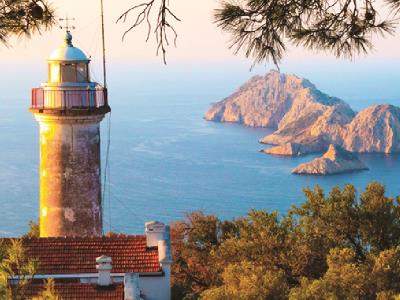
Elmalı District is located in the Mediterranean Region, on a bowl-shaped plateau squeezed between the folds of the Taurus Mountains extending to the Western Mediterranean Region. The district is established on the northern foothills of Elmalı Mountain, which reaches an elevation of 2,053 meters. To the north of the district is Elmalı Mountain, to the east is Tilkicilik Hill, to the west is Topdağı Hill, and to the south lies the Elmalı Plain. Its altitude ranges between 1,050 and 1,150 meters above sea level.
Considering that Elmalı is only about 40 km vertically from the sea and its high altitude, the interaction between coastal and plateau climates is clearly evident in the average temperatures. As one of the oldest settlements of Antalya, Elmalı has preserved its naturalness. Being one of the most beautiful districts that still retain the atmosphere of an old Turkish town, the history of Elmalı dates back to the 5th and 4th centuries BC, when the city was founded by the Lycians, an Asian people. Indeed, the continuation of Lycian beekeeping traditions to this day is a miraculous heritage that must be preserved for future generations.
Elmalı Has Taken the Names "Kalaba" and "Ameles"
The city later came under the rule of the Romans, Byzantines, the Seljuk Empire’s Teke Beylik, and the Ottomans. In its current form, the district reflects Seljuk and Ottoman cultural and artistic influences, having acquired the names Kabalı, Ameles, and Elmalı. There is no information about why these names were given to the district. Archaeological excavations in the region have revealed significant artifacts from all periods.
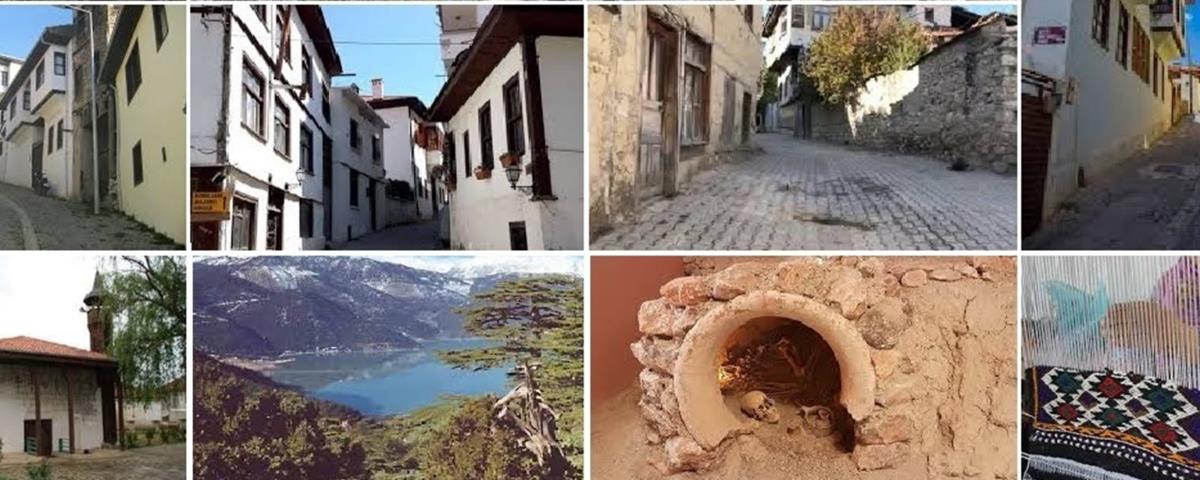
Among the most important historical heritages of the area are the Lycian Way, Kızılbeli Tombs, the Ivory Woman Statue with Çoruhlu attire, the Silver King Statue, Semahöyük Jar Tombs, the Inscribed Rock of Yapraklı Village, the Rock Tomb of Armutlu Village, and the Beehives of Söğle Plateau. Excavations near Karataş in Semahöyük Village in the east of the district and Beyler Mound near Beyler Village in the west show that the region has been settled since the Bronze Age.
During the Ottoman period, as the center of the Teke Beylik, Elmalı District served as the residence of the Teke Pashas, a fact that still demonstrates its architectural influence today. The city had an economy based on local production; in the past, various animal products were collected, and cotton weaving and leatherworking were part of its commercial life. Structures from the 19th century that still exist include twenty mosques, four churches (three Greek Orthodox and one Armenian), five baths, and three inns.
Cultural Riches of Elmalı
After a major fire in the 1940s that completely destroyed the district, Elmalı was rebuilt. In 1883, there was also a telegraph office in the district. Elmalı is highly developed in arts and crafts, including copperwork, blacksmithing, jewelry, and the weaving of carpets, kilims, sacks, and bags. Stone carving, coffee grinders, and woodworking are also significant artisanal traditions in the district. The district has a long history of weaving, and durable tent materials were produced locally. Goat hair rugs and cloaks, with rich motifs, have been made since the Seljuk period.
Elmalı Houses: A Historical Legacy
Elmalı is also famous for its festivals. Historical celebrations such as the Elmalı Yeşilyayla Wrestling, Gömbe Festival, Elmalı–Tekke Village Abdal Musa Festivities, and Hıdrellez Celebrations are important events where locals actively participate and integrate these traditions into social life. The Yeşilyayla Wrestling continues today as a traditional sport. The Elmalı Yeşilyayla Oil Wrestling, ongoing for more than six hundred fifty years, is among the traditional values cherished by the locals. These festivals also attract participants from surrounding villages. Cultural symposia and exhibitions are organized today to preserve and document these values for future generations.
One of the most notable features of Elmalı is its historic houses. Architecturally striking wooden houses, built with the sturdy wood of cedar trees, have stood for centuries. Some examples are over five hundred years old, retaining their characteristic features and inspiring admiration. Narrow streets lined with bay-windowed houses create a sense of stepping into a time tunnel.
The decorations of the houses, with stylized floral motifs, reflect the depth of Anatolian culture and represent a significant cultural heritage. One such example is the “Yeşil Kapı” (Green Gate), a structure with a 1,600-year history, whose wooden craftsmanship is priceless.
Elmalı Houses Are Made of Cedar
The district, surrounded by forests and blessed with cedar-covered natural landscapes and a favorable climate, has a versatile tourism potential. This forested environment also influenced the use of wood as a primary construction material. The most prominent examples of Elmalı architecture are located on Aylar Street in the Tahtamescit Neighborhood. Restoration work on historic houses in Elmalı is ongoing.
As the name suggests, Elmalı is also famous for its apples. In addition to apples as delicious as those from Amasya, the district once had a fascinating “bee house” tradition. Locals built “dirim houses” inspired by Lycian sarcophagi, and bees adapted to these structures to create honeycombs. These houses served as unique honey centers. The height of these houses reaches seven meters.
The dirim houses are built on stone bases three to four meters high, supported by juniper wood, providing a safe space for bees to produce honey. On top of the base, there are 60 compartments arranged pyramid-style: 30 facing north and 30 facing south. Inside each compartment, juniper logs carved into tube shapes serve as hives. With these wooden hives, the height of the dirim houses reaches seven meters.
11.06.2021