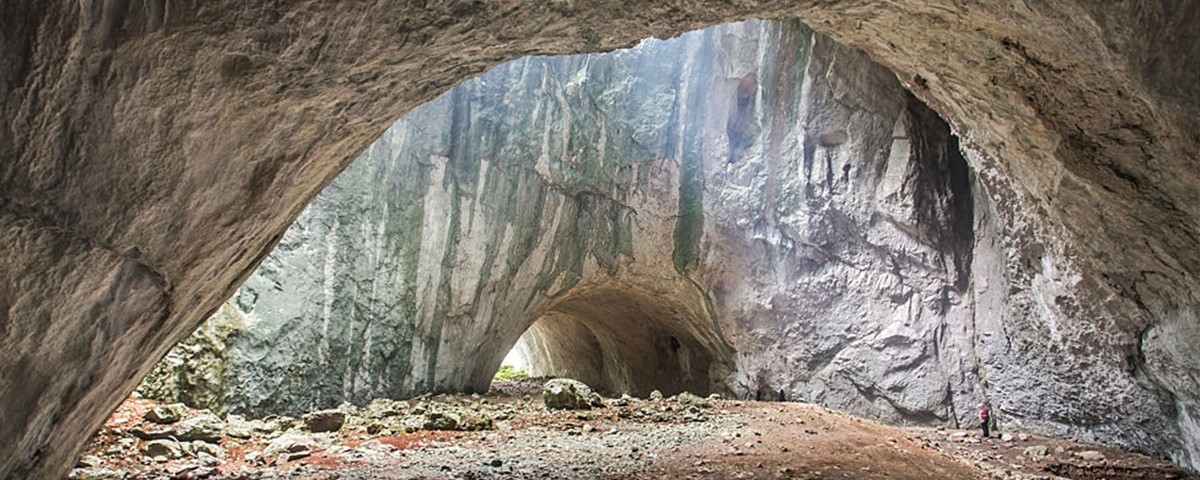
A cave is an underground cavity that, although connected to a surface at a depth where sunlight does not reach, usually has sufficient width and height to allow a human to crawl inside. The science that studies caves using geological, hydrogeological, mineralogical, biological, archaeological, paleontological, and paleoanthropological methods is called speleology. Our country, a natural wonder, is also quite rich in caves. In Alanya alone, there are five known caves that have been discovered so far: Dim Cave, Damlataş Cave, Cüceler Cave, Korsanlar Cave, Aşıklar Cave, and Fosforlu Cave.
Damlataş Cave
Cüceler Cave
Even with this many caves in Alanya alone, when we evaluate Antalya in terms of caves, we see that the magnificent Taurus Mountains are dotted with uniquely beautiful caves. From a tourism perspective, caves such as Karain Cave in Yağca village in the central district of Antalya, and Damlataş and Dim Caves in Alanya are open to tourism. These caves also attract the attention of internationally trained scientists, bringing many foreign researchers to our country. While there are caves that are open and accessible to the public, there are many more that await to be developed for tourism. Among these are: Yalan Dünya Cave, Altınbeşik Cave, Kocain Cave, Beldibi Cave, Sırtlanini Cave, Geyikbayırı Cave, Konakaltı Cave, and Zeytintası Cave. Other caves include Küçükdipsiz Cave, Yerköprü Cave, Gürleyik Cave, Derya Cave, Karataş Semahöyük Cave, Çimeniçi Cave, Mahrumçalı Cave, Peynirdeliği Cave, Tilkiler Cave, Mavi Cave, Düdensuyu Cave, Aslanlı (Yaren) Cave, Hasbahçe Cave, Kadıini Cave, Korsanlar Cave, Âşıklar Cave, Kekova Island Sea Cave, Asırlı Island Sea Cave, Güvercinlik Sea Cave, Güvercinini Sea Cave, İncirli Sea Cave, Hıdrellez Cave, and İnbaş Cave. These have been identified and preliminarily researched and should be opened to tourism as soon as possible.
Caves are not only valuable for their underground formations, unique visuals created by high humidity, or scientific importance, but they also serve as therapeutic locations, particularly beneficial for asthma patients. For example, Damlataş Cave, within walking distance from Alanya center and close to the Alanya Archaeological Museum, was unexpectedly discovered in 1948 during stone extraction for port construction. Upon entering the cave, visitors were amazed by the beauty of the dripstone formations and the chambers as they descended to the cave floor. Later, under medical supervision, it was determined that the cave provides therapeutic benefits for asthma patients, who undergo a 21-day treatment program. Today, the cave is an important geographic and tourist attraction, with an entrance fee. According to figures provided in 2015 by Alanya Mayor Adem Murat Yücel, Dim Cave was visited by 282,067 people in 2014, generating revenue of 806,894 TL, and 4,000 asthma patients visited the cave for therapeutic purposes. Students receive a 50% discount on the 4.5 TL entrance fee. During the winter season, groups of 40 or more pay 1.18 TL per person, while families of martyrs, veterans, their relatives, and disabled visitors enter for free. Asthma patients pay 0.30 TL. Many residents of Alanya from various nationalities also frequently visit Dim Cave.
Dim Cave
Dim Cave is located on the western slope of Cebel Reis Mountain at an altitude of 232 meters above sea level. Access is via an asphalt road through Dim Creek valley from Kestel town. A portion of the cave has been known since ancient times and was used as a shelter by local residents. The cave was first measured and documented by speleologists in 1986. It was leased from the government in 1996 by MAĞTUR A.Ş. to develop it for tourism. The company completed construction, lighting, and accessibility projects within a year and opened the cave to the public in September 1998. Dim Cave holds the distinction of being the first cave in Turkey opened to tourism by private enterprise. Tourism operators could similarly view other unexplored caves as potential tourism assets.
Dim Cave is located within a very hard, thickly layered, grey-dark grey limestone formation of the Alt Paleozoic age, forming the main mass of Cebel Reis Mountain in the Central Taurus Mountains. It is a natural karst cave formed by the dissolution of limestone along fault zones by rain and snowwater enriched with carbonic acid (H2CO3). Tectonic activity is also believed to have contributed to its formation. The cave developed along a NE-SW oriented fault zone and is located near Dim Creek Valley. Lower levels of limestone transition into shale, which is impermeable. The Taurus Mountains belong to the young Alpine mountain belt and achieved their current heights during strong vertical tectonic movements in the Plio-Pleistocene. During the same period, Dim Creek deepened its valley, and Dim Cave evolved to its current state.
Dim Cave is 360 meters long, horizontal, and has a width of meters and height of meters. The interior is adorned with rich and diverse dripstone formations, with ongoing development in some areas. At the end of the cave, 17 meters below the entrance, there is a small lake covering 200 m². The water accumulates here due to the impermeable shale at the base.
Who benefits from this scientific data? Many scientists and medical professionals worldwide seek access to this information, which can be conveniently obtained online. Many of them travel to these caves and make hotel arrangements for their stay. Maintaining scientific data in tourism is straightforward: at the entrances of open, ticketed caves, one can encounter large numbers of tourists as well as a significant number of speleologists.
07.07.2021