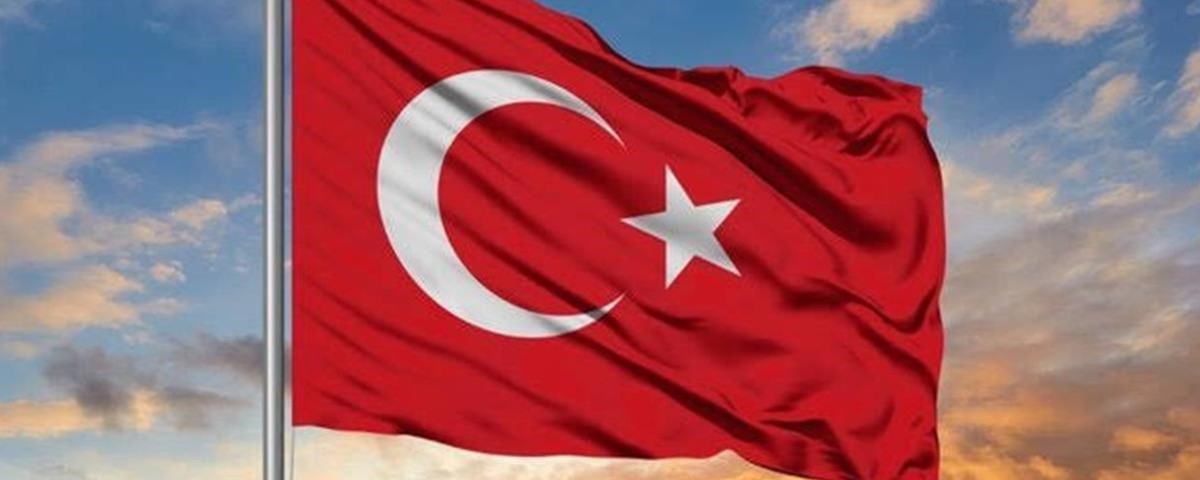
The anniversary of the adoption of the İstiklal Marşı, the national anthem of the Republic of Türkiye, is celebrated every year on March 12. It was accepted by the administration of the Grand National Assembly during the years of war and struggle, even before the establishment of the modern Republic of Türkiye was officially declared. Let’s take a look at the history of the İstiklal Marşı, which was adopted in 1921—two years before the proclamation of the Republic in 1923—and at the life and details surrounding the great poet and writer Mehmet Akif Ersoy.
The Acceptance of the İstiklal Marşı and the Process
The Grand National Assembly, established for the National Struggle during the collapse of the Ottoman Empire, felt the need for a national anthem during the War of Independence. To motivate the people for full-scale mobilization in a time of war, a process to write a national anthem was initiated. The Ottoman State, shaped by military and religious references rather than national references, did not have a national anthem—only the marches of its military band, the Mehteran. Since there was no existing national anthem to inherit, the Grand National Assembly in Ankara organized a competition in 1921, one year after its founding, offering a prize of 500 TL for the writing of the National Anthem. Rıza Nur, the Minister of Education (Maarif Vekaleti), who oversaw the competition and determined the prize amount, also set an additional 500 TL award for a musical composition. To encourage as many entries as possible, information about the competition was distributed across all reachable parts of the country. Within six months, exactly 724 poems were sent to the Assembly. The announcement was delivered to actively operating newspapers by the Assembly. The original form of this announcement was as follows: “Attention of our poets: A competition has been announced by the esteemed Ministry of Education to express and chant the struggle our nation has undertaken for independence, both internally and externally, through an Independence March. This competition will continue until December 23 of the year 36, and a literary committee will select the accepted work from among the submitted pieces. A reward of five hundred liras will be given for the accepted lyrics. Another competition will later be opened for the composition, for which at least five hundred liras will be allocated. All applications shall be made to the Ministry of Education of the Grand National Assembly in Ankara.” The Ministry of Education formed a commission within the Assembly to evaluate these 724 poems. Experts appointed to the commission read and evaluated each poem one by one and selected 6 of them. These 6 finalists were printed at the Assembly Printing House and distributed to all deputies for voting.
This brings us to the involvement of Mehmet Akif Ersoy. According to historical sources, there are two different accounts. The first says that the commission did not find any of the submitted poems—including the six finalists—suitable to be the national anthem, and that Minister of Education Hamdullah Suphi (Tanrıöver), who was also a writer and deputy, persuaded fellow deputy, writer, and poet Mehmet Akif to write a poem. Another opinion states that Mehmet Akif, persuaded by Hamdullah Suphi, submitted his poem to the competition along with the other six. What both accounts agree on is this: Mehmet Akif did not enter the competition when it was first announced. The reason he avoided participating was the monetary prize. The poet who later said, “May God never again make this nation write another Independence March,” approached this subject from a deeply sacred perspective and objected to placing a financial reward on it. However, as noted above, Hamdullah Suphi wished to persuade the poet he trusted and admired. After persistent efforts, on February 5, 1921, he met with Mehmet Akif, assuring him that the issue of the prize money would be resolved, and wrote the following letter: “My most dear and esteemed sir, There are many ways to eliminate the reason for your not participating in the competition for the Independence March. Your producing the desired poem has remained the final remedy for achieving this purpose. Whatever your noble concerns require, we shall fulfill all of them. I kindly request that you do not deprive the country of this powerful means of inspiration and excitement. With this opportunity, I express my deepest respect and affection once again. February 5, 1337 [1921], Minister of Education, Hamdullah Suphi.” Upon this, Mehmet Akif stated that he was a deputy and thus did not consider it appropriate to enter the competition, but that he could write what was needed as a separate poem. It should be noted that Mehmet Akif was the deputy of Burdur, took an active role during the National Struggle, and had previously been a member of the Committee of Union and Progress during the Constitutional period.
To Our Heroic Army…
Mehmet Akif submitted the İstiklal Marşı, written in 10 stanzas, to the Grand National Assembly with the note “To Our Heroic Army.” The Ministry of Education and officials admired this work, which was almost like an epic of war in 10 stanzas. Hamdullah Suphi, an excellent orator, read the poem passionately from the Assembly podium, and the entire Assembly applauded it while standing. The poem, almost an epic of the War of Independence itself, begins with an address to the crescent in the star and crescent of the Turkish flag. It emphasizes that a nation fighting with total civilian mobilization for freedom and independence cannot be subdued. The poem also highlights the Turkish nation and the power of faith. In each stanza, a different value is emphasized, and the poem challenges the imperialist forces—described as the “monster with only one tooth left”—who sought to subjugate the Turks.

The İstiklal Marşı was first published on February 17, 1921, in the newspapers Hakimiyeti Milliye and Sebilürreşat, and it was received with great admiration by the public. On March 12, 1921, the Grand National Assembly officially adopted the İstiklal Marşı. Its author is Mehmet Akif Bey, later to take the surname Ersoy, the deputy of Burdur, a writer, and a poet. After its acceptance, Mehmet Akif donated the 500 TL prize allocated from the state budget to Darülmesai, an institution providing vocational training for women and children. Mehmet Akif Ersoy did not include the İstiklal Marşı in his collected works, Safahat, stating that this anthem belonged to the Turkish Nation. Known also for his poem about the Çanakkale Martyrs, with its unforgettable line, “For a crescent, O Lord, what suns are setting,” Mehmet Akif is among the most gifted and valuable figures this land has produced. After the lyrics of the İstiklal Marşı were accepted on March 12, 1921, a new competition was opened for its musical composition, and the composition by Ali Rıfat Çağatay was accepted. This composition was used from 1924 until 1930. However, in 1930, a decision was made to change it, and the composition created in 1922 by Osman Zeki Üngör—the one still used today—was adopted.
17.10.2025