The matter of desserts places these lands among the most fertile geographies of the region. As a people who are fond of food and taste, the culinary culture created by this society is known almost all over the world. Ranked among the top five in the world in terms of variety and flavor, Turkish cuisine is naturally quite ambitious when it comes to desserts as well. We have researched the most prominent traditional Turkish desserts and the stories behind their names. Here are the traditional Turkish desserts that have come from the past to the present.
Baklava
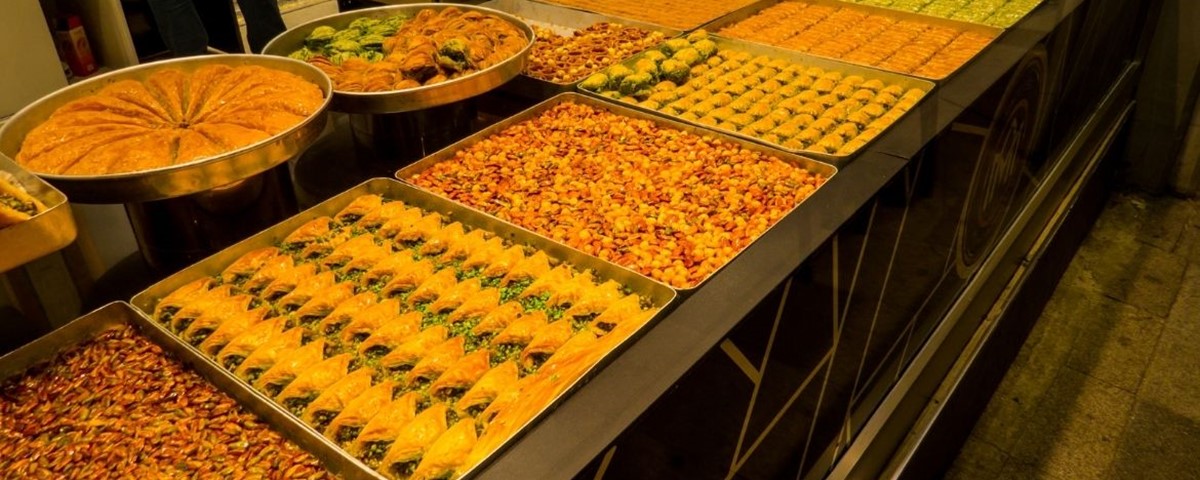
Baklava is so important for Turks that a diplomatic crisis almost broke out between Greece and Turkey in the recent past because of the “Who owns baklava?” debate. Joking aside, it is a fact that Greece applied for an international patent for baklava. However, even before the Greece–Turkey dispute, this topic was contentious within Turkey as well, but Gaziantep finally claimed ownership with its clear stance. Baklava, prepared by layering paper-thin phyllo dough, placing walnuts or pistachios between the layers, baking it, and then soaking it in syrup, requires a lot of finesse and craftsmanship despite this general description. Derived from a pronunciation style such as baglaya, formed by adding a suffix to the Turkish-origin Mongolian word “Bayla,” meaning “to wrap,” baklava passed from Turkish into other languages. Baklava is at the top of our list, as it is one of our country’s most important culinary icons with hundreds of varieties and styles.
Katmer
If our path has brought us to Gaziantep and we’re talking about dough-based desserts, we can’t overlook katmer. Katmer, the national dessert of Gaziantep, is made from dough rolled even thinner than baklava dough, so thin that you’ll think it will tear at any moment as it is being prepared and greased. Filled with pistachios and clotted cream, folded into a bundle and baked, then sweetened with syrup just like baklava, katmer is a dessert you must try if you visit Gaziantep, earning its place in our list of Traditional Turkish Desserts.
Kalburabastı
Also known as hurma tatlısı (date dessert), kalburabastı is a syrup-soaked dough dessert. Separated from phyllo-based pastries and similar to şekerpare, kalburabastı has a denser texture. Its name comes from the dough being pressed against a kalbur (sieve) or colander during preparation. Walnut filling is used inside kalburabastı.
Hanım Göbeği
Hanım göbeği (literally “lady’s navel”), one of the desserts that draws attention more with its name than its taste, dates back to the Ottoman Palace. Hanım göbeği is also made from the combination of dough and syrup. Very similar to İzmir’s lokma, it is prepared by frying yeast dough and sweetening it with cold syrup. Its name originates from the Ottoman palace as well. Because its puffier shape resembled the belly of Ottoman women—who were traditionally considered more attractive with a slight belly—the dessert was named Hanım göbeği.
Kadayıf
Kadayıf also holds an important place among traditional Turkish desserts, though it is also influenced by Arab culture. Kadayıf has three types: flat kadayıf, shredded kadayıf (tel kadayıf), and bread kadayıf. Each type differs in preparation but has its own distinct identity. Shredded kadayıf is prepared by stuffing, frying both sides, and then adding syrup. But its production process is just as special as its cooking. Here is how raw shredded kadayıf is made: https://www.youtube.com/watch?v=_JkB-cpI-mo
Flat kadayıf batter contains eggs, while bread kadayıf uses a dough similar to bread dough, giving it its name. All three types take the name kadayıf because they are fried and soaked in syrup. The word kadayıf is of Arabic origin, derived from the same root associated with baklava.
Sütlü Nuriye
Again, we encounter a dessert that arouses curiosity with its name. Before telling its story, it’s worth noting that Sütlü Nuriye is a type of phyllo dessert similar to baklava but incorporates milk, giving it a touch of milk-based dessert characteristics. So why does it contain milk? During the coup period, when a price cap was imposed on baklava, an alternative dessert was created using milk instead of syrup and hazelnuts instead of pistachios. Thus, Sütlü Nuriye was invented. This invention became so popular that it survived to this day. The question everyone wonders—“Where does the name Sütlü Nuriye come from?”—does not have a definitive answer.
Aşure
Aşure is a dessert deeply rooted in religious tradition. Its name comes from the Arabic word Aşura. The month of Muharram, significant in Islam, is also referred to as the Month of Aşure in some regions. According to legend, after Prophet Noah completed his ark and set off with his followers, their food supplies diminished during the great flood. To use resources economically, they mixed whatever they had into a large soup, which they consumed until the flood ended. That legendary soup became what is known today as aşure. Because of this story, the ingredients used in aşure can vary according to personal preference. The tradition of preparing and distributing aşure during Muharram developed during the Ottoman period. For this reason, we can count aşure among Traditional Turkish Desserts.
Zerde
Now it’s time for a lesser-known dessert: zerde. What kind of dessert is zerde? It is probably the least known dessert on this list. Its name comes from turmeric—also saffron in some variations—which gives it its color. Made with broken rice, turmeric, starch, pistachios, and raisins, zerde occupies a category of its own. Zerde’s hometown is Gaziantep. Although Antep cuisine is generally associated with phyllo-based desserts, the fact that it also shines through with zerde shows how significant a place it occupies in Turkish cuisine.
Cezerye
We also include cezerye—which you can find in its finest form in Istanbul’s Spice Bazaar—in our list as a type of Turkish delight-style dessert. The Spice Bazaar is known for its abundance of spices, and cezerye contains many, from cloves to turmeric, ginger to cinnamon. Its main ingredient is carrot. Carrot puree is mixed with walnuts and infused with spices.
Tavuk Göğsü
For those who wonder: yes, tavuk göğsü (chicken breast pudding) does indeed contain chicken breast. The name is literal—its main ingredient is the white meat of the chicken. Do not confuse it with yalancı tavuk göğsü, the fake version without chicken. Like sütlaç and kazandibi, tavuk göğsü belongs to milk-based desserts, but because it blends a savory ingredient into a sweet dish, it earns its place among the most interesting traditional Turkish desserts.
Güllaç
Güllaç, a symbol of Ramadan, does not have to be eaten exclusively in that month. Güllaç sheets are made by mixing cornstarch, wheat flour, and water into a thin phyllo-like layer. These sheets are used not only for güllaç but also in pastries. The dessert’s name evolved from güllü aş (meal with roses) because rose water was used in its preparation. It is an elegant dessert where milk meets dough, with roots extending back to the Ottoman palace.
Künefe
We end our Traditional Turkish Desserts series in Hatay with künefe, a dessert cooked over fire with shredded kadayıf. A shared dessert of Turkish and Arab cultures, künefe is a beloved treat that slowly cooks uncovered on the stove, featuring the famous Hatay cheese inside. As the saying goes: “Let’s eat sweet and speak sweet.” Enjoy your meal.
02.07.2021