Turkish Simit and Food Pairings
When you think of Turkish Simit, classic pairings come to mind: tea-simit, simit-ayran, simit-cheese, and others. In Turkey, there are many foods that not only complement simit but have become a habit. Almost every city has its own simit specialties, reflecting the diversity in preparation, culture, and history. Let’s explore the delicious journey of Turkish Simit.
History of Turkish Simit
Simit dates back approximately 500 years. The name comes from the Arabic word “Simad,” meaning “good, white flour.” These flours were stored in large depots called simithanes in the Ottoman Palace and baked into ring-shaped breads in the Sultan’s bakeries. The first simit records date to 1593 in Üsküdar Şeriye Sicili. Evliya Çelebi noted in his travelogue that early simits were the size of cart wheels. Favored by the palace, simit soon spread among the public, and simit bakeries began to appear.
Simit in the Streets and the Ottoman Era
As simit production increased, it became a staple in palace breakfasts and sold on the streets of Istanbul. During Ramadan, the Sultan distributed simit to soldiers, enhancing its fame. Recipes and professional simit bakers emerged. Through bakeries, simit spread from Istanbul to Bursa, Anatolia, and the Balkans. Until the 18th century, it was known as “halka-i simit,” later shortened to “simit.”
Legal Regulations on Simit
Competition with bread led to a 1761 Istanbul decree prohibiting simit makers from producing bread. This established clear distinctions between simit bakers, bread bakers, and pastry bakers. Simit production thrived among the public and remained important in the palace. Evliya Çelebi noted 70 simit bakeries in Istanbul with 300 workers. Simit survived through the Republic era, except for 1945-1949 during WWII when production was restricted due to flour scarcity.
Simit Production Techniques
Simit is generally classified into three types: taban, tava, and kazan.
-
Taban Simit: Baked in a stone oven using a paddle.
-
Tava Simit: Baked in a pan.
-
Kazan Simit: Low-sesame, shiny appearance.
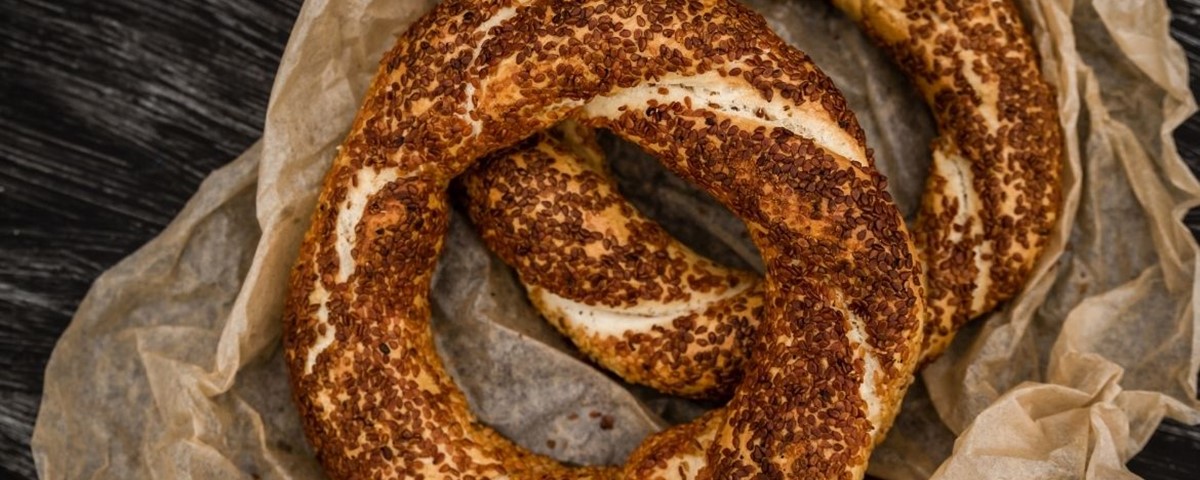
The dough is shaped into rings, coated with sesame, and baked. To help sesame adhere, molasses or sometimes sugar is used. Molasses is mixed with water, applied, and the simit is coated with sesame. Variations in molasses application and baking techniques create city-specific flavors.
City-Specific Simit Varieties
-
Istanbul Simit: Cold molasses, slightly crunchy. Sold in licensed glass carts.
-
Ankara Simit: Unique flavor, a must-try.
-
Izmir Simit: Crunchy, known as “gevrek.”
-
Eskişehir Simit: Soft, lightly sesame-coated.
-
Trabzon Simit: Sesame-free, known as “kel simit.”
Each city has its own local simits and famous bakeries. Average weight: 50g, calories: ~350.
Cultural and International Significance
Simit is recognized internationally. Traditional types like Kandil simit and chain-store simits help maintain its global presence. In foreign hotels offering Turkish breakfast, simit is often presented, known as “Turkish Bagel” in English. Best enjoyed warm and fresh.
20.10.2025